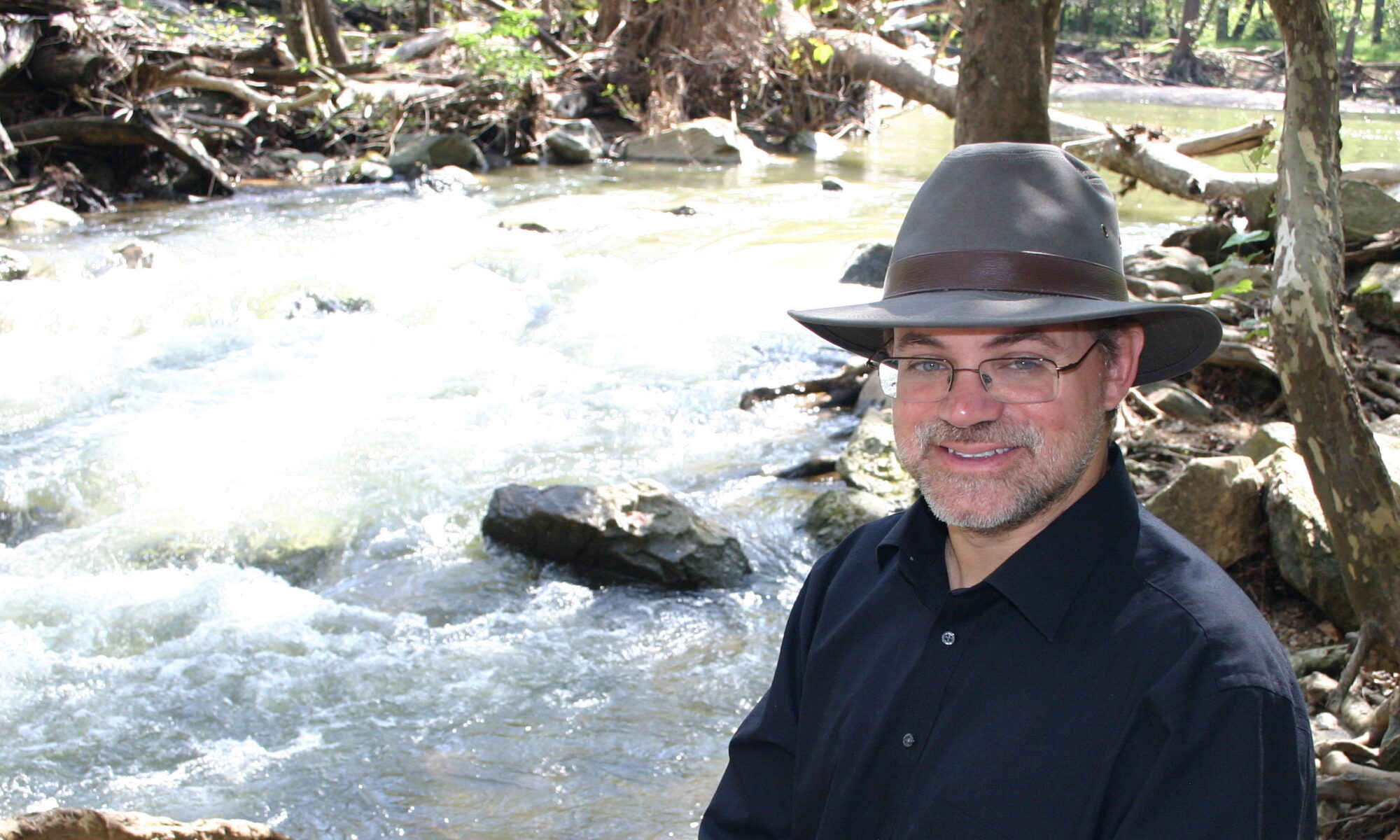
I can trace my fascination with science and technology back to the days of playing with chemistry sets in the garage and learning BASIC on a Radio Shack TRS-80. One of my foundational memories comes from a biology class at a Duke summer program. The professor gathered us around his desk and held up three playing cards, fanned out with their backs facing us, just like a bridge player would hold them. He then asked, “What do you see?”
There were some amused looks, a snicker or two, and a few people said something like, “Three cards.”
He smiled and shook his head. “What you see,” he said, “is the back of one card, and small slivers of what may be two other cards. But you have no way of knowing if those two entire cards are actually there.”
In my middle-school mind it was like a bomb going off, and I got it. I saw the whole thing: how amazingly easy it is for our assumptions to deceive us, and how hard it is to do science well, with proper clarity of thought and observation.
My formal degrees are in chemistry and pharmacology, and most of my early research was in protein biochemistry and NMR spectroscopy. After a postdoc at the NIH, I moved into bioinformatics and science communication, and later into data analytics and digital product development.
Through all the twists and turns, the principles remain. Science is a tool, and only a tool. But it is one of the best tools we have for thinking about a problem clearly, as far as the observable data will take us. It is a way of seeing. It is a way of thinking. It is a way of revealing the small lighted patches of what we know and where they fade into the vastness of what we do not. And it has an uncanny way or reminding us that as the fallible and biased humans that we are, it is incredibly hard for us to do it right.
View my full professional history on LinkedIn.